Executive Assistants
5 ways the executive assistant role is changing in tech companies
Oct 12, 2023
7 min read


Tech business culture is dynamic and constantly shaped by innovation, trends, and market forces. What was common knowledge in the tech world just three years ago may now be considered outdated, and the same goes for how companies think about internal roles. As organizations change, expectations around those roles change as well.
This is particularly true for the executive assistant role.
At Viva, this shift has led to a new model of remote executive assistant support designed to meet the needs of modern tech companies.
Executives’ expectations have evolved. They are not looking for passengers. They want drivers — strategic partners who can operate with initiative and grow alongside the company.
These expectations influence how executive assistants are hired, trained, and coached.
From assistant to operational partner: 5 ways the executive assistant role is changing
The responsibilities associated with executive assistants today are very different from what many companies expected 10 or 20 years ago.
In many tech companies, the role now extends beyond administrative coordination into operational partnership.
Executive assistants supporting fast-growing organizations must understand the company’s pace, be comfortable wearing multiple hats, and become familiar with industry dynamics such as fundraising cycles, board meetings, and product launches.
For companies hiring EAs, this means talent acquisition needs to be approached carefully. It is not simply about filling a role — it is about reducing hiring risk, enabling fast onboarding, and ensuring operational continuity.
At Viva, this is where the model differs.
1. Access to pre-trained, high-performing executive assistants
Executives are matched with executive assistants who have already been pre-selected, trained, and coached.
This approach removes the uncertainty typically associated with hiring and allows leaders to begin working with experienced professionals immediately.
Fabiana, a remote executive assistant at Viva, provides an example of how the role can expand.
While supporting Actuate, a security-focused tech company, she gradually took on responsibilities that extended into operations analysis and executive support for the leadership team.
Her work included improving onboarding workflows, analyzing financial data, preparing internal reports, and helping leadership maintain visibility into company growth metrics.
Rather than functioning purely as an administrator, she became an operational partner who amplified the executive team’s impact.
2. Lower cost compared with in-house hiring
Hiring a full-time executive assistant through Viva can cost roughly 50 percent less than hiring internally.
The service is fully managed and includes everything from training, to equipment, to benefits, to time-off protocols.
For companies seeking full-time executive support while maintaining financial discipline, this structure provides a practical alternative to traditional hiring.
3. Built-in executive assistant backfill support
Operational continuity is critical when executive assistants take time off.
Viva provides backup EA support when a primary EA is unavailable due to leave, illness, or vacation. The transition happens seamlessly without additional work from the executive.
For example, Marina recently stepped in to backfill for an EA supporting a Series A tech company. During that period, she handled meeting logistics, distributed notes, coordinated operational tasks, and resolved several last-minute challenges.
The transition allowed the executive team to maintain productivity while their primary EA took necessary time off.
4. Continuous feedback and professional development
Customer Success Managers regularly gather feedback to ensure executive assistants are aligned with their executive’s expectations.
This structure allows EAs to continuously improve their support and expand their capabilities.
In one example, an executive from a Series C tech company asked her EA to organize an internal hackathon. Although hackathons were outside the EA’s prior experience, she researched best practices, developed a runbook, scheduled coordination meetings, created judging forms, consolidated results, and managed prize logistics.
The event ran successfully, demonstrating how executive assistants can grow into broader operational responsibilities.
5. Faster onboarding
Traditional EA hiring processes can take months.
In fast-moving tech companies, waiting three months for executive support can significantly slow progress.
Because Viva maintains a pool of trained professionals ready to start, executives can begin working with an EA in less than 24 hours.
While other hiring models are still sourcing candidates, executives using Viva may already have spent several months working with their EA and evaluating the partnership.

A CEO reflects on what he needed from an executive assistant
“I need someone who is a self-starter, problem solver, and fixes things.”
CEOs often wear many hats. At some point, most leaders realize they cannot do everything themselves — especially when they are serious about the pace and scale of their company’s growth.
One executive initially sought support for administrative responsibilities such as email management, calendar coordination, and travel planning. He had previously worked with a personal assistant but eventually decided to move on from that arrangement.
When asked what was missing, the CEO explained:
- The support was reactive rather than proactive.
- The support did not match the pace at which he was operating.
- He needed someone who could anticipate needs and stay several steps ahead.
Because of this prior experience, the executive believed he already understood what an executive assistant could do. When speaking with an account executive, he even asked not to review the full list of responsibilities an EA could support.
That perspective changed once he saw Viva’s six areas of support.
Six areas where executive assistants support tech leaders
1. Calendar management
Optimize schedules for focused work, manage meeting requests, resolve conflicts, and prioritize critical commitments.
2. Email management
Organize inboxes, draft replies, filter unnecessary communication, and maintain a clear, structured email workflow.
3. Travel and expense management
Coordinate travel logistics, manage itinerary changes, track expenses, and ensure smooth business travel.
4. Meeting support
Prepare materials, manage logistics, capture action items, and improve meeting effectiveness.
5. Team engagement
Organize offsites, coordinate team activities, manage celebratory gifts, and support internal culture initiatives.
6. Operations and special projects
Organize documentation, build workflows, conduct research, and support operational initiatives.
- After reviewing this structure, the executive explained:
“I’m understanding that a personal assistant handles only some of these responsibilities, but an executive assistant supports much more.”
This moment reflected an important shift in perspective. Once the CEO understood the operational support an EA could provide, he realized that a well-trained executive assistant could unlock far more delegation than he had previously considered.
This experience highlights a common pattern among leaders in tech companies. Executives are looking for professionals who can integrate into a fast-moving environment, demonstrate initiative, learn quickly, and adapt to changing priorities.
Above all, they want someone who is motivated by outcomes and results.
Beyond administrative work: executive assistants as operational partners
Executive assistants increasingly function as operational partners within technology organizations.
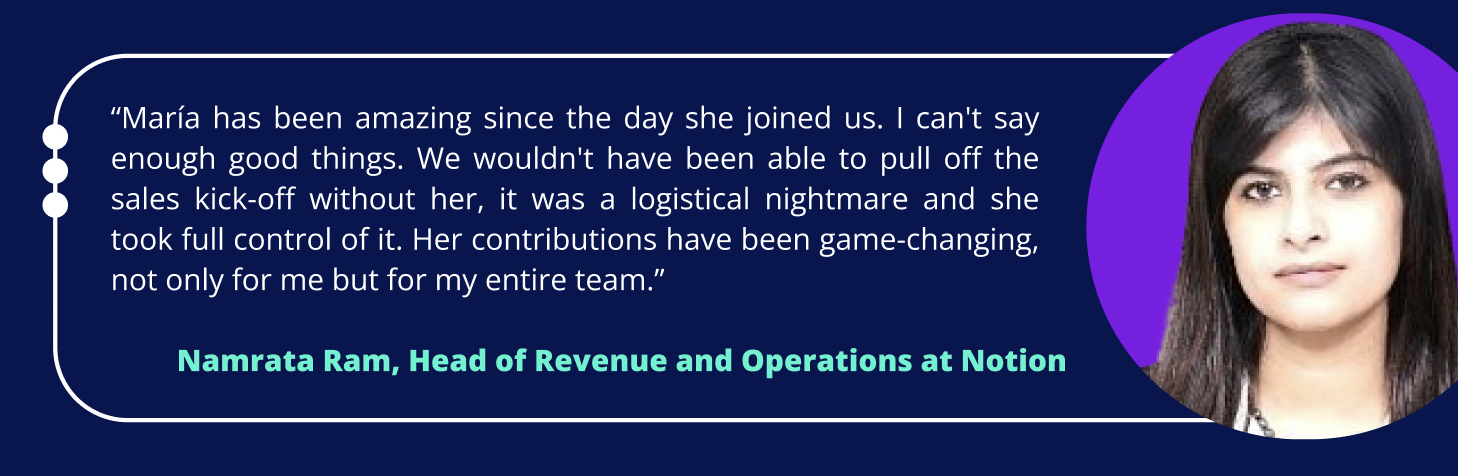
- Namrata Ram, Head of Revenue and Operations at Notion, described the impact of having an EA who can manage both operational details and broader coordination across teams.
- Similarly, Karen Sage, Chief Marketing Officer at Shipwell, partnered with a Viva executive assistant to improve focus and organizational clarity. Her EA coordinated major trade show logistics, supported Customer Advisory Board meetings, managed marketing documentation, and helped generate 56 qualified leads during Shipwell’s first post-pandemic industry event. She also streamlined merchandising logistics and built a centralized marketing repository that later helped onboard a new product marketing leader.
Across many technology companies, executive assistants are earning trust by managing complex initiatives and enabling executives to focus on strategic priorities.
Interested in hearing more? Book a call with us so we can answer any questions you may have.