Success Stories
This EA’s sense of urgency set up her executives for success
Apr 11, 2024
7 min read


Virtually all startup executives have said this sentence at least once: move fast and break things. Despite it having become sort of cliché, the phrase rings true. Startups need to operate with a sense of urgency, and startup executives are constantly trying to manage their never-ending to-do lists. That’s why they need remote executive assistants who can move as fast as they do, or even faster than they would expect.
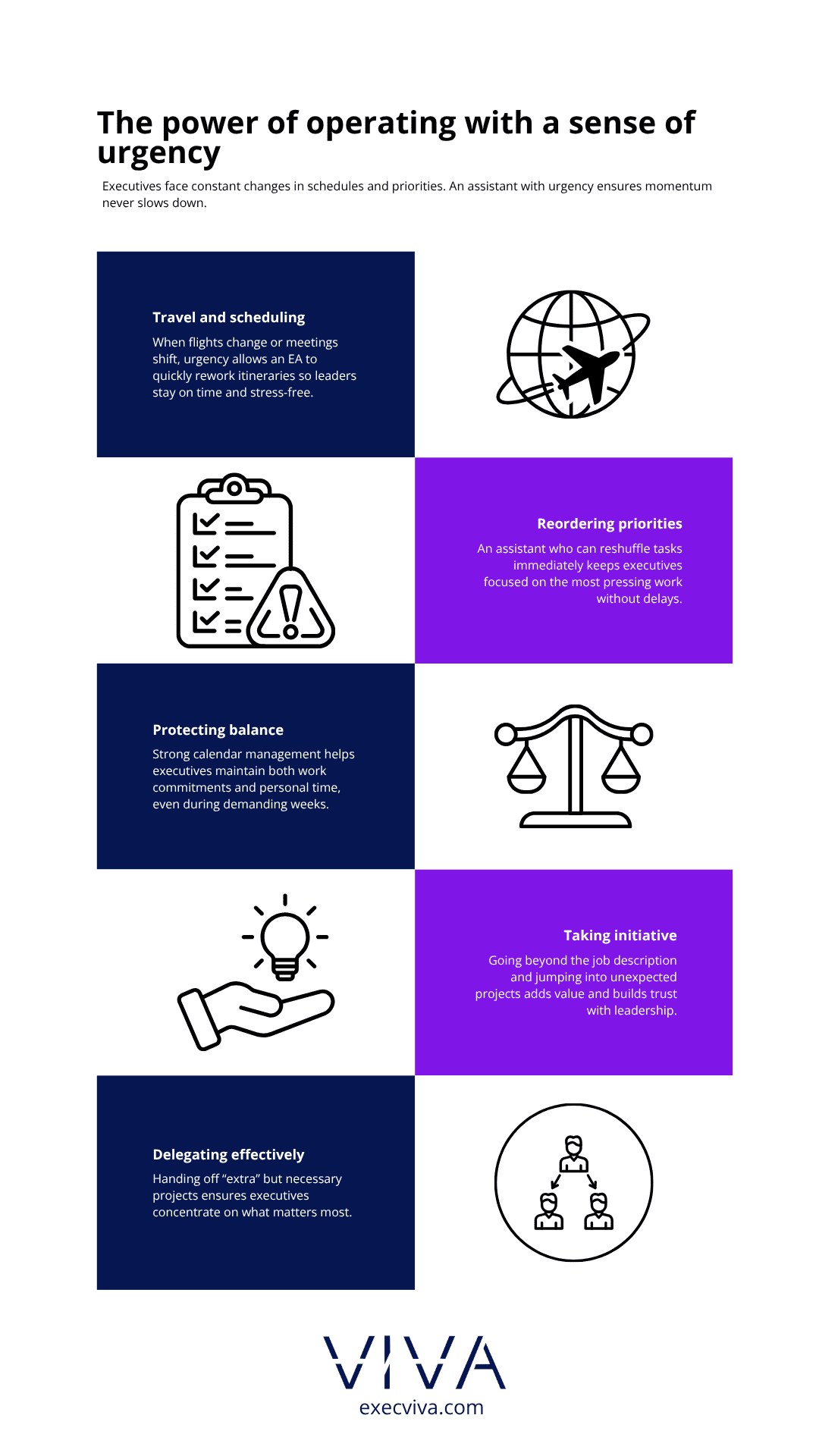
Table of contents
- Why is a sense of urgency so important for a remote executive assistant?
- What is Telegraph?
- One executive assistant for two startup executives
- These startup executives’ biggest pain points
- Why is a sense of urgency so important for travel planning?
- Above and beyond the EA job description
Why is a sense of urgency so important for a remote executive assistant?
For Telegraph, one of our customers, moving quickly is especially important. Why? Two of their executives are constantly on the move, not only traveling several times a week but also having to change their itineraries while they are already in the middle of traveling. How could they ever fulfill all the commitments in their calendars, if they felt like they were playing a never-ending game of Jenga? That’s why they needed an EA whose sense of urgency was unparalleled.
If your day also changes unexpectedly, you could also benefit from having a virtual executive assistant who can shuffle and re-arrange your calendar. You want an EA who can do this with such mastery, that your day is still productive even if that means you’re meeting with a customer in New York while you are supposed to be working on a board meeting deck back in the office.
This is what Daniela, one of our Viva executive assistants, has managed to do. She keeps both her executives productive and stress-free, despite having to change travel itineraries time and time again due to shifting priorities and emergent needs.
What is Telegraph?
Telegraph is a Chicago-based startup with a team of around 25 employees scattered around the US. This Series A tech company secured $10 million in their funding round and is backed by investors like Construct Capital, Crosslink Capital, 8VC, and BoxGroup, among others.
As they describe themselves, “Telegraph is a cloud-based operating system that uses cutting-edge technology to bring instant visibility and seamless logistics to the freight rail supply chain.” Their goal is to modernize rail freight and make it a more attractive option for shippers.
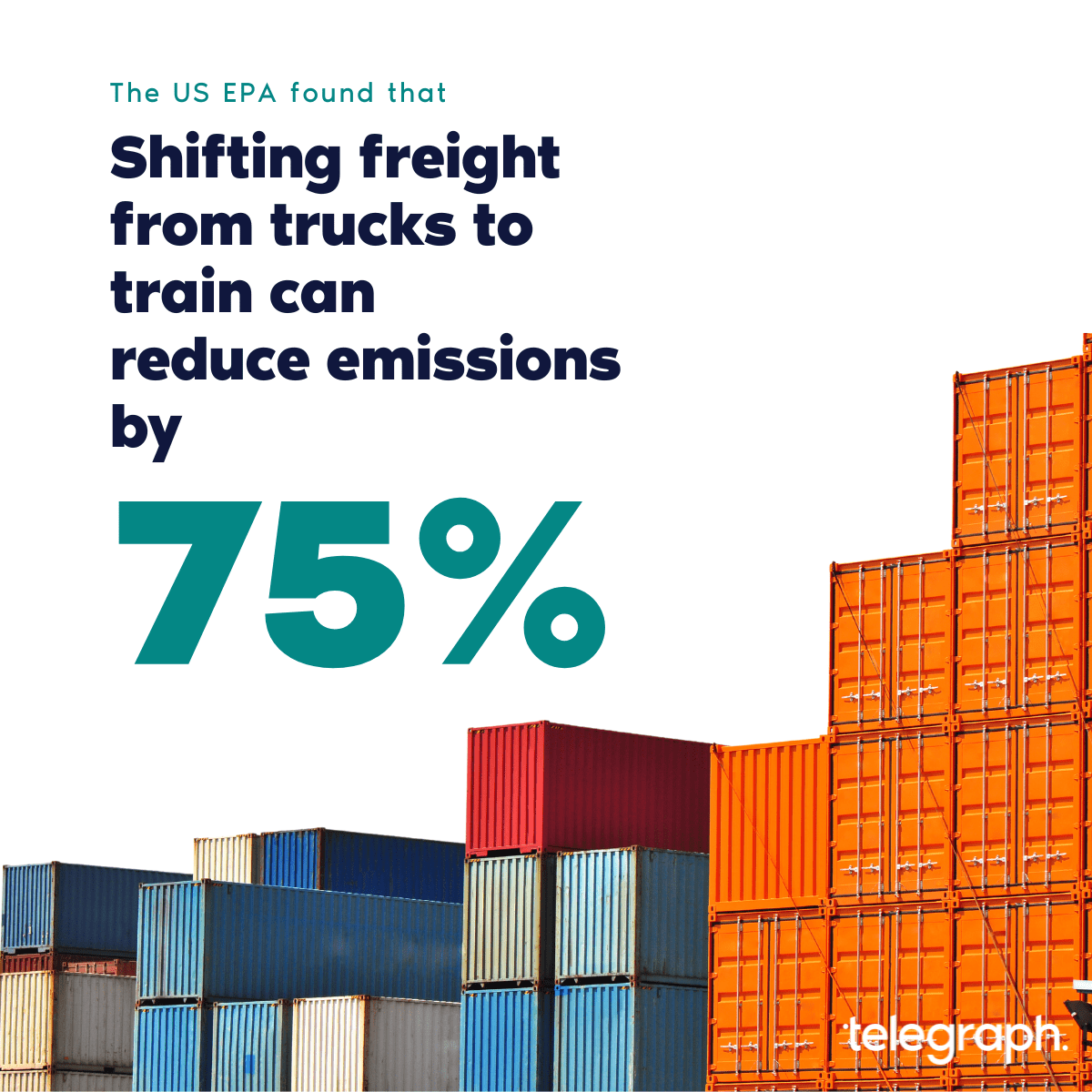
Freight railroad operations are complex. Telegraph is a modern platform that consolidates everything a rail operator needs into a single digital experience, including equipment utilization and reliable arrival predictions. As if that was not enough, railway operations are more sustainable than ever, reducing greenhouse gas emissions for shippers globally. Transportation via rail reduces greenhouse gas emissions by an average of 75%.
As we mentioned before, moving fast is important for any startup, but it’s even more important when motion is at the core of your business.
One executive assistant for two startup executives
When we started our partnership with Telegraph, we were doing it on a 1:1 ratio (one EA supporting one executive). That means Daniela, a Viva executive assistant, was supporting only one of Telegraph’s executives: Harris Ligon, co-founder and CEO. But Harris saw so much value from his EA and in such a short amount of time, he decided that Shachar Astor, co-founder and CGO, could also benefit from having Daniela’s support.
These startup executives’ biggest pain points
Even though Harris and Shachar had experienced having an executive assistant, they were both operating without any kind of support when we met. That meant that on top of all their responsibilities, they were also operating the business. Some of those tasks were easier to handle, but when it came to travel planning, they knew they could create more value for their customers by re-focusing their time (and dollars) elsewhere.
Not all startup executives have to travel often, but these two executives prioritize face time with clients and teammates, and arranging their work trips became their biggest pain points. Harris is on the road every week and Shachar often travels with several team members, which means that every trip needs perfect coordination in order to be successful.
The problem was that because Telegraph’s execs operate at such great speed, they found themselves booking an entire trip, only to have to change it soon after because a new priority took center stage. This meant that they personally needed to book flights, hotels, coworking spaces, car rentals, and work meetings over and over again.
They had to deal with rescheduling everything, letting other parties know there had been a change of plans, and rearranging their calendars to try and make sense of it while staying productive. Soon enough, it became clear that they were missing out on opportunities to tackle core business priorities.
Why is a sense of urgency so important for travel planning?
When you travel as often as these executives do – as much as once or twice every week – you can’t afford to lose a flight. In doing so, you could miss a whole event, or even worse, miss an appointment with a prospect or potential investor. That alone could cost you thousands, if not millions, of dollars.
Luckily for Harris and Shachar, Daniela is now completely in charge of their travel planning, and even the whole company’s trips. Her sense of urgency is saving them an incredible amount of time. But how?
Whenever there’s a change of plans for an upcoming trip, Daniela reprioritizes her tasks and operates with a sense of urgency so acute that even before her executives have the time to check in with her for updates, she’s already arranged everything: from booking new flights to letting the front desk at the hotel know that they’re going to be later than expected.
This is how an EA can make you more productive
In a startup, few things operate independently of others. That’s why, when you fall behind on one priority, it will most likely affect other aspects of your work and even slow some of your coworkers down.
“As leaders, our role is to serve others. Daniela helps us avoid becoming bottlenecks so our organizational velocity remains high,” added Harris Ligon.
Whenever they had to change a work trip, their calendar suffered the consequences, and a big part of those calendar blocks were either internal or external meetings. This meant that their trip readjustments also affected other people: team members, customers, or candidates.
Since Daniela joined Telegraph, she has made sure that her execs’ shifting calendars don’t hurt other priorities. If a trip has been changed, she always moves something else to make it fit in the now empty spot, whether it’s rescheduling a meeting or allocating focus time for her executives to work on a pending project. Her level of intuition plays a big role when it comes to her execs staying productive and stress-free – regardless of how many fires start burning.
Having a perfectly organized calendar is especially important for executives who live by it. Harris is one of those executives, treating his calendar like a guidebook for professional obligations and personal opportunities, like chances to take his daughter to dance or tennis class. That’s why Daniela’s organizational skills have positively impacted not only his work life but also his personal life. She puts everything in his calendar: from meetings to lunchtime to family events. Achieving a work-life balance is easier when you have an outstanding executive assistant.
Above and beyond the EA job description
Your executive assistant’s sense of urgency doesn’t just come in handy when you travel too much or when your calendar is out of control. Having an adaptable executive assistant also means they can take on new responsibilities without getting overwhelmed or without thinking, “This doesn’t fall under my job description.”
A great EA is someone who loves a challenge, someone who is excited to learn a new skill, and someone who says “Yes, if,” not “No, because”. If you’re hesitant about delegating seemingly “unrelated” projects to your executive assistant, learn from Harris’ and Shachar’s examples. They’ve trusted Daniela with travel planning and calendar management, but they’ve been pleasantly surprised by the quality of her work and her initiative in taking on other responsibilities, such as making decks more visually appealing.

*Harris only had the image to the left and asked Daniela to come up with dividers inspired by the initial design. This is what she came up with.
Other responsibilities that Harris and Shachar have entrusted to Daniela, and that you can delegate to your executive assistant now, include:
- Proofreading documents and communications
- Creating an entire brand manual for one of her exec’s personal projects
- Designing the company hoodie without a formal request
- Filtering a list of 100 conference attendees, and designing a personalized outreach campaign
- Renovating the PTO process for the entire company (Notion page, calendar, platform)
- Ordering new hardware and arranging delivery to team members
A truly outstanding executive assistant is capable of adapting to your ever-changing needs, whatever they are. Curious about what a Viva remote executive assistant can do for you? Chat with our team to see what having a Viva EA could look like for your startup.