Leadership
C-suite skills: What companies should prioritize
Feb 6, 2025
5 min read



Soft skills are crucial for C-suite executives in decision-making, leadership, and networking—key drivers of business growth. But which should founders and HR teams prioritize? This article explores their value and how to identify them in C-suite candidates.
Table of contents
- Why have soft skills become more valuable for C-suite executives?
- Soft skills to prioritize in your C-suite search
- Interpersonal skills
- Communication skills
- Adaptability
- Critical thinking
- Tips for HR leaders for evaluating soft skills in C-suite candidates
- Create bespoke job descriptions
- Do your research on candidates
- Design your interview and assessment process in advance
- Be strategic about what your company needs
- Align hiring with company culture
Why have soft skills become more valuable for C-suite executives?
The soft skills game for C-suites has changed. Previously, a steady hand with plenty of industry experience and a reputation for strong financial management was considered the standard requirement for C-suite appointments. Executives with experience from major multinational companies were top of the wishlist for companies looking to build their C-level teams.
Today, business moves faster than ever. Technological advancements, economic conditions, and shifting attitudes to work practices mean companies need to be agile, adaptable, and attractive places to work if they want to remain competitive. Organizations increasingly value leaders with excellent personal skills, creativity, adaptability, and an open-minded approach. These skills can help companies create a healthy working environment to attract and retain the best talent while responding to ever-evolving economic and business challenges.
Soft skills to prioritize in your C-suite search
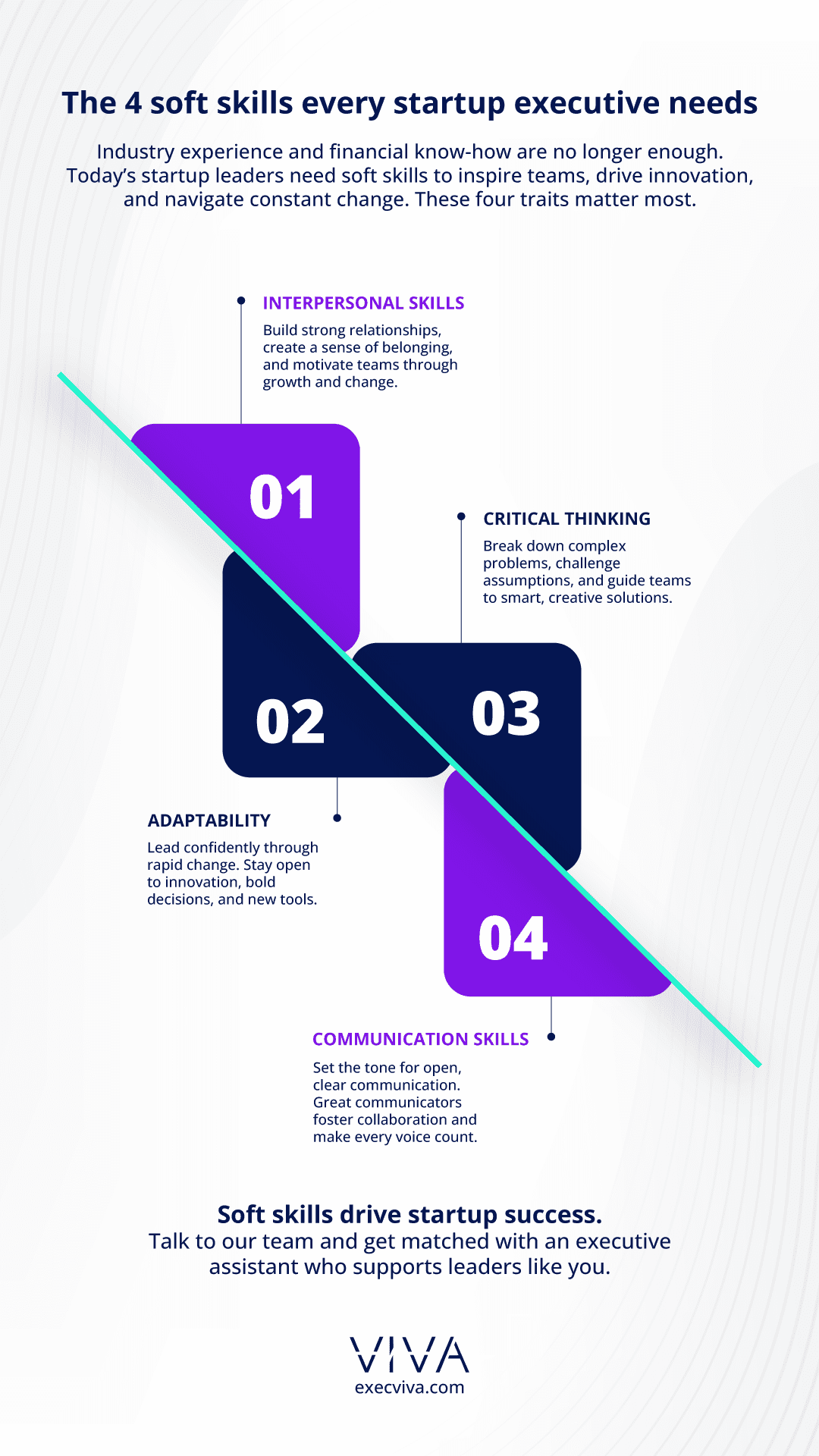
Not all soft skills are equal. If you want to support your company to reach the next level, these are the soft skills to look for in your search for C-suite talent:
Interpersonal skills
Strong interpersonal skills are essential for effective leadership, and for building a team that’s happy, motivated, and determined to succeed. Great C-level leaders form strong relationships with their teams and help them feel valued and appreciated. Interpersonal skills are particularly valuable for executives in companies where teams are likely to grow and change every year.
Communication skills
Communication skills don’t just refer to the ability to speak and write eloquently; they’re also about the working environment and company culture. It’s up to the senior team to set the tone of an open, communicative work environment that encourages collaboration. Strong communicators can foster a work culture where every voice is heard and matters.
Adaptability
The rapid pace of technological change, driven by AI, automation, and remote work tools, has transformed industries. For C-level leaders, adaptability is now essential. Embracing change, making bold decisions, and staying open to innovation are all critical for navigating shifts and driving company success.
Critical thinking
Critical thinking is essential for executives. The ability to analyze situations objectively, challenge assumptions, and develop innovative solutions helps organizations gain a competitive edge. Paired with adaptability, this skill equips entire orgs to navigate challenges and thrive in crowded markets.
Tips for HR leaders for evaluating soft skills in C-suite candidates
These tips can help you find the C-suite candidates with the most suitable soft skills:
Create bespoke job descriptions
You can encourage applications from candidates with the right sort of soft skills simply by taking a thorough, bespoke approach to creating job descriptions. Generic C-level job descriptions might attract candidates with a wide range of skill sets, which may not necessarily fit with your organization. Make sure your C-suite job descriptions focus on soft skills and the types of qualities your business requires.
Before advertising a vacancy, assess what soft skills the company needs from a strategic perspective. If, for example, you’re prioritizing new business, job descriptions might focus on networking, negotiation skills, and client management. On the other hand, if you want to scale up operations, you might focus on management skills, strategic planning, and problem-solving.
Do your research on candidates
C-suite candidates should demonstrate a proven track record and strong reputation in their industry. Take time to review their professional history, including the organizations they’ve been part of, their contributions to its success, and the culture they’ve helped shape. Examine their LinkedIn profiles and tap into your professional network for valuable insights from colleagues or collaborators who have worked with them. An executive assistant can support you in creating pre-meeting briefings for you to look at before an interview.
Design your interview and assessment process in advance
Being intentional about your interview process can ensure you’re gaining the right type of information and understanding about your candidates, while they know exactly what you’re looking for. Plan who will sit on the interview panel and draft interview questions and discussion topics in advance. Meet with your panel before the interview and discuss the candidate’s resume, and how you want to approach the interview. Assign roles and questions to each interviewer, and be specific about your scoring categories and criteria.
Be strategic about what your company needs
C-suite hiring should focus on finding the candidate who best fits the role and aligns with your org’s strategic goals. While soft skills are critical for fostering success, they should complement a candidate’s ability to address the unique challenges of your industry and growth stage.
For example, a Series B healthcare company scaling its operations might prioritize a COO with strong leadership and adaptability skills, paired with proven experience navigating regulatory environments and managing complex supply chains. This balance ensures the hire can drive growth while supporting the company’s mission and culture.
Align hiring with company culture
C-suite hiring should reflect your company’s strategic direction and values. Prioritize soft skills that align with your company culture, as they play a crucial role in shaping the organization you aim to build, driving its future success. If you haven’t documented your company’s core values and principles, start by doing so. Consider incorporating cultural statements into your job descriptions to attract the right types of applicants, and culture fit assessments to rank the fit of those who apply. Finally, a robust, thorough onboarding process can help new hires understand your company culture and how their soft skills can help build and maintain that culture.