Executive Assistants
How can I know if my EA is trustworthy? A guide for startups
Dec 8, 2023
5 min read


As a startup executive, you want to delegate some of your administrative, operational, and strategic tasks to an executive assistant who can help you save time and money. But you also want to make sure your EA is a trustworthy employee who can handle your sensitive data and information with care and respect.
How can you find such an EA? And how can you trust your employees with your data security and confidentiality? At Viva, we know that trust is the foundation of any successful relationship.
That’s why we have a rigorous process to select, train, and monitor our EAs, who are instructed on data security and confidentiality.
In this blog post, we will share with you the key aspects of trustworthiness that you should look for in your EA, and how we at Viva ensure that our EAs meet and exceed those expectations.
We will also show you how we foster an ethical culture and instill core values among our EAs, and how we help you to trust your employees with your data. Read on to discover more.

The “trust triangle” and how to hire trustworthy EAs
Francis Frei and Anne Morriss have been helping companies gain trust from their stakeholders through what they call the Trust Triangle.
Frei worked with Uber for over a year to support the brand in its effort to regain trustworthiness after several incidents affected the company’s reputation.
The Trust Triangle describes the 3 qualities or drivers that make a person or an entity trustworthy. These are: authenticity, logic, and empathy. According to the Trust Triangle philosophy, any “wobble” in these areas creates a trust issue.
This concept is a good starting point for matters related to building and maintaining trust between B2B companies and service providers. It’s crucial for the foundation of strong leadership (meaning that executives can measure their trustworthiness as leaders using this triangle) and helpful for understanding what it is executives need so they’re able to trust their EAs.
How do you know if your executive assistant is trustworthy?
Authenticity is when people can experience the real you and can also be their real selves. This is especially useful when it comes to fostering diversity of opinion, which drives growth. If everyone agrees with the same solution and nobody is disrupting it, you might miss out on innovating, an activity that characterizes startups.
How is it useful that your EA is authentic? Are they asking questions, giving feedback, and suggesting new ways of doing things? Are they proactive?
Proactivity usually looks like a person who is able to recognize an area of opportunity in a problem, finds a solution, and then executes a plan to reach that solution.
Empathy is when others know you care about them. Does your EA care about your success? Is this person really invested in your company? Do they actually want to help you succeed and reach your goals? Is this just another job for them, or are they passionate about your mission and your industry?
Sometimes, EAs will not just be new at your organization, but also new to your industry. This shouldn’t be a problem if you hire for competency and character. Having someone who is a driver and a fast learner is sometimes preferable to a person with years of experience who has a bad attitude toward work.
Logic is sometimes the easiest quality to understand, but the most difficult to assess. Is your executive assistant actually qualified for the work? What sort of tools and techniques will they be using to provide support in email and calendar management? How is planning travel yourself different from an EA’s skill set in travel planning?? What templates will they be using to plan offsites? More importantly, how will your data be secure with this person you’re just meeting for the first time, someone who will have access to your information?
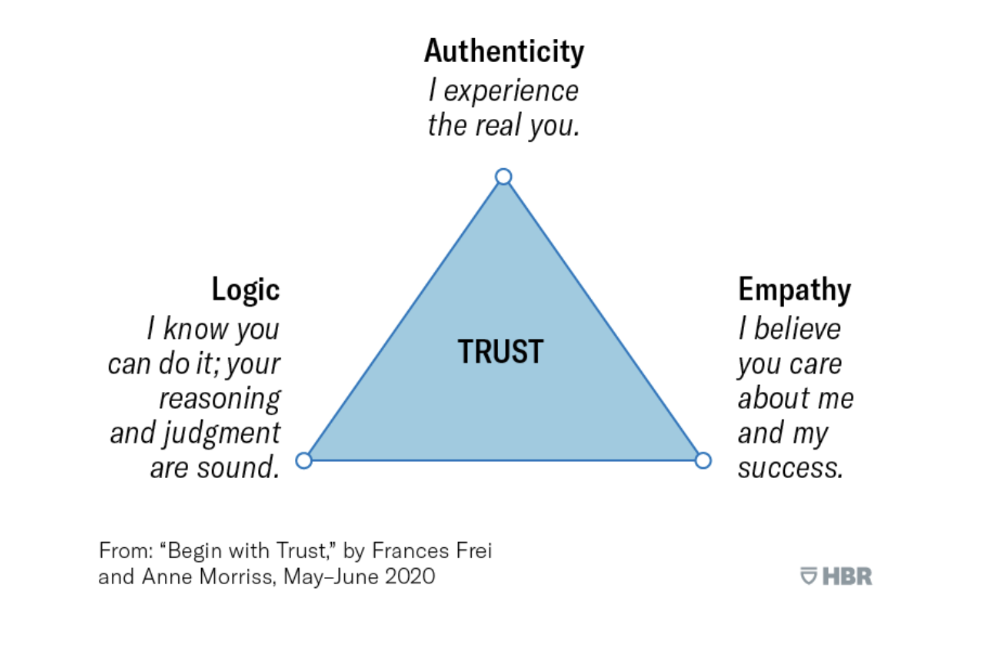
In this blog, we emphasize the Logic axis. It’s not that Authenticity or Empathy are not important – we have ample examples about how we support executives in these areas, from the proactive EA who made a difference in Hasura, to the many real life stories of happy executives who’ve found value in hiring a Viva EA.
Going back to the logical perspective of building trust, we need to talk about security protocols that make Viva a great company to work with. Without these protocols, training, and response management techniques, our call for trust wouldn’t be transparent or logical.
What are we looking to accomplish with our security protocols at Viva?
Startups — regardless of the industry — adhere to data and information safety protocols, standards, and values to protect themselves and their customers. Because Viva provides executive assistant support, it is imperative that each of our EAs receives proper training and ongoing support so they can meet and exceed expectations in this area.
Our ethical and compliance policies demand that our EAs act with proper transparency and in a safe manner. These are non-negotiable expectations we have at Viva.
Our approach is divided into 3 key sections: Confidentiality, data privacy, and data security
Confidentiality’s main component is our talent: our EAs. It encompasses their ethical behavior and views from the screening process when we interview them, and run background and reference checks with a carefully crafted approach. We’ve interviewed hundreds of individuals with this method and are engaged in a process of continuous improvement.
We also train our EAs for 4 weeks with specialized confidentiality modules that instruct them on access controls and authentication, incident response management, data backup, and recovery.
Compliance is another big part of our confidentiality structure, along with our zero-tolerance policy for any breach of data safety.
Our data privacy and security components focus on implementing appropriate protocols and measures to safeguard data from unauthorized access, disclosure, alteration, or destruction.
We are mindful of accountability and governance, having data accuracy, privacy policies, employee awareness, and training, along with data breach response protocols that are readily accessible whenever necessary.
If you are curious about these technical matters, please reach out to our team, who will gladly walk you through our protocols in greater detail.
Ethical culture at Viva
Hiring for trust is something we take very seriously at Viva. We infuse ethics into our training, from initial approach to screening, all the way to training and pairing with customers..
We encourage our team to be aware of potential threats to confidentiality and to treat data and information within the actions and protocols designed to safeguard our customers’ needs. It’s not just about having these protocols; it’s about the continuous effort to keep them at 100% compliance.
Additionally, some of our EAs have even taken specialized training and compliance certifications to be able to assess their customers’ data – for example, having certifications to visualize data in biotech. This specialized training is managed by our Customer Success team, which makes sure the EA has what they need to support their executives and their companies.
Our Viva values are another way we continuously build trust with our team. According to Harvard professor Francis Frei, this is one of the ways to build a trustworthy culture in companies.
These are our Viva values:
- Act with integrity: Always make ethical decisions in the best interest of our customers, colleagues, and communities.
- Trust is our currency: Be accountable and reliable to others.
- Think big: Develop bigger, bolder hypotheses, and experiments to scale our impact by 10x.
- Uphold idea meritocracy: Put your ego aside, seek input from others, and let the best ideas win.
- Move fast and break things: Operate with a bias toward action and a sense of urgency, even if you make mistakes.
- Use your voice: Be engaged in discussions and come prepared with strong opinions, loosely held.
- Driver mindset: Take complete ownership in turning problems into solutions and ideas into outcomes.
- Customer obsession: Seek to understand our customers, wow them, and use their words to guide our decisions.
- Embrace feedback: View feedback as a gift, relentlessly seek it, and use it to grow.
- Empower each other: Elevate those around you and challenge them to step outside their comfort zone.
If you have additional questions regarding confidentiality, please reach out to our team.
FAQs
- What specific red flags should I watch for in an Executive Assistant that might indicate they are not trustworthy?Pay attention to inconsistencies in their communication, missed deadlines, or reluctance to provide transparent updates. Another red flag is if they avoid answering direct questions or frequently shift blame onto others.
- How can I effectively build trust with a new Executive Assistant who works remotely, especially if they are in a different time zone?Building trust with a remote team member may feel different from doing so with an in-house colleague, but the fundamental approach remains the same: it’s all about setting clear protocols and actively nurturing the relationship. Schedule weekly one-on-one meetings with your executive assistant and take an interest in both their professional and personal lives. Since your EA will work closely with you, it’s important to really get to know the person who will be by your side.
- What steps can I take if I suspect a breach of confidentiality or trust with my Executive Assistant?To safeguard confidentiality and trust, implement a thorough recruitment process with a focus on ethics. Screen candidates through questions on confidentiality, transparency, and ethical decision-making. Provide training on data privacy and security, supported by clear policies like non-disclosure agreements and two-step verification. Use security tools like antivirus software and password managers to protect sensitive information.If a breach is suspected, gather evidence, consult legal counsel if needed, and evaluate the situation. Address honest mistakes with training, but terminate employment if trust is broken. Regularly review and update policies to ensure ongoing compliance and integrity.