Executive Assistants
Maximize the impact you get from your executive assistant
Jun 15, 2024
7 min read


We recently had the privilege of sitting down with Cara Silverman. She is a professional with an impressive career journey and over 15 years of experience as an executive assistant.
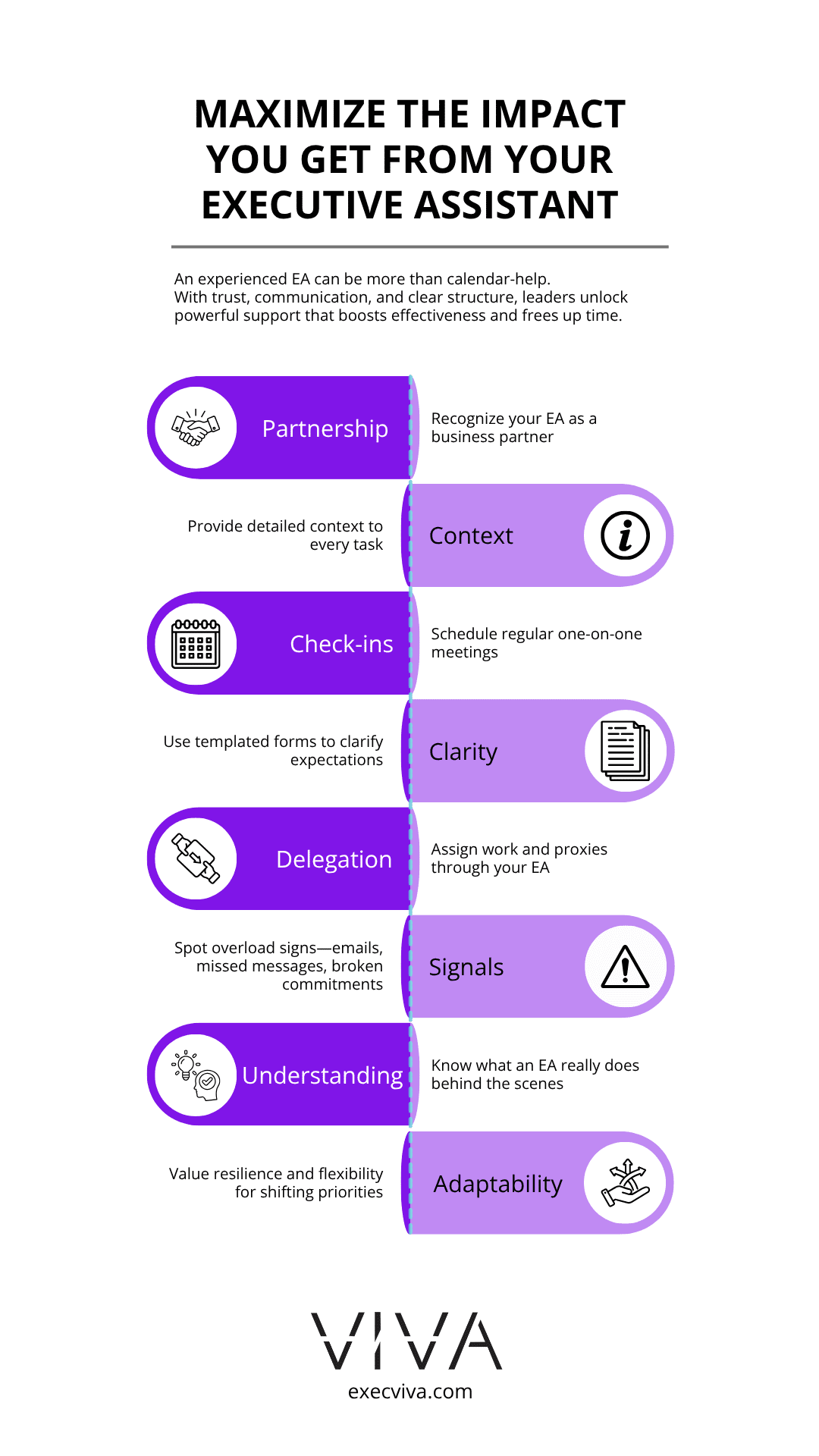
Table of Contents
- From admin to trusted partner
- Two key traits that turn good EAs into great ones
- 5 tips for executives to maximize the impact they get from their EAs
- Signs to identify who needs executive support
- The most common misconceptions about EAs
Who is Cara Silverman?
With an impressive career trajectory that includes supporting CEOs, COOs, SVPs, and presidents at renowned brands such as MongoDB and Zocdoc, Cara currently brings her expertise to Duolingo, a global mission-driven language-learning platform. With her wealth of experience, we were eager to tap into Cara’s extensive knowledge and gain insights into the intricacies of the role of an executive assistant.
Cara is deeply passionate about the dynamic nature of her job. She told us that no two days are ever the same: from managing calendars to fostering team culture, each task contributes to her ongoing learning experience. The EA role has allowed Cara to work on a range of different projects, but her favorite aspect of being an executive assistant is supporting executives who prioritize team morale.
This includes activities such as celebrating birthdays, work anniversaries, and other important events. She also loves implementing initiatives like spot bonuses and fostering open communication. Additionally, she values engaging in regular career conversations with team members, demonstrating a commitment to their professional growth and development.
Cara’s journey into administrative work started as a way to explore career options. It quickly evolved into something much more profound—a journey of learning, growth, and becoming a trusted partner to business leaders.
From admin to trusted partner
As a company that specializes in training and matching remote executive assistants with startup execs, we know what the path looks like for someone to transition from an admin role to becoming a strategic business partner. People who want to explore the exec support industry often start off as VAs or admins and then become EAs or even CoS. A lot has to happen for an admin to be able to grow in their role. One of the most important developments is the admin’s ability to build trust with their executives.
We asked Cara how has she managed to build trust with all the executives she’s worked with and this is what she told us:
“I always lean into over-communication. If one of my leaders asks me for something, I will continuously update them on it. Especially if I know it’s really important, even though they’re not asking for these updates. I want them to know I’ve got this, so they don’t have to worry about it. In my experience, that naturally builds trust.”
As we delved deeper into the discussion, it became apparent that Cara’s role extends beyond traditional administrative tasks. She emphasized the importance of trust-building with executives. Open communication and proactive follow-ups are the keys to a long-lasting relationship. For Cara, trust is not just about completing tasks; it’s about understanding the nuances of each executive’s preferences and working style.
What are the two key traits that turn good EAs into great ones?
One of the key insights Cara shared was the pivotal role of EAs in maximizing executive potential. While everyone could benefit from some form of assistance, EAs offer a unique blend of organizational skills, adaptability, and thought partnership that can significantly enhance an executive’s effectiveness. From managing calendars to orchestrating complex events, EAs operate behind the scenes, ensuring smooth operations and seamless execution. When we asked her which skills or traits were a must-have for EAs in tech, her answer was clear:
“Resilience and adaptability. You have to be able to roll with the punches and adapt when you need to adapt.”
Whether it’s supporting multiple executives or tackling a totally new task, EAs thrive on challenges and can often juggle more than an average employee. Their resilience and adaptability make them invaluable assets in environments like the tech industry, where change is constant.
5 tips for executives to maximize the impact they get from their EAs
Executive assistants are essential allies for executives, supporting them in their daily tasks and responsibilities. Here are five practical tips Cara shared for executives to make the most of their partnership with their EAs:
- Recognize your EA as your business partner: Understand that your EA is more than just an assistant. They are your partner in achieving your goals. The moment you start seeing them as business partners, you start unlocking their true potential.
- Provide detailed context: The more information you share with your assistant, the better they can support you. Clear context helps them prioritize tasks and handle matters efficiently, even without constantly consulting you.
- Schedule regular one-on-one meetings: Setting aside time each week for a quick catch-up with your assistant can greatly improve communication and coordination. Check-in meetings ensure that both of you are aligned on priorities and upcoming tasks, reducing stress and misunderstandings. Lots of executives say, “Just Slack me,” but as Cara explains: “Your EAs message is just one out of 600 other Slacks that you have. That just becomes more stressful for you.”
- Use templated forms: EAs can create templates for various tasks, such as filling out forms with details like urgency level, desired outcomes, and relevant context. This simplifies delegation and ensures clarity in instructions.
- Delegate responsibilities to proxies: Assigning trusted team members as proxies to represent you in meetings or tasks can lighten your workload. EAs can assist you in this regard. Delegation empowers your team and allows you to focus on important strategic matters.
By putting these five tips to use, you can bring your relationship with your EA to the next level. It sounds simple, but in reality, it will elevate your executive assistant to a partner level. That’s when they’ll start acting as an extension of you rather than operating like any other direct report.
If you’re looking into hiring an executive assistant for yourself or your leadership team but don’t know who to prioritize, pay attention to these signs of alert.
Signs to identify who needs executive support
Some companies add executive support to the benefits package of every C-level executive. That’s one possible approach, but a job title isn’t all it takes to decide who could benefit from having an executive assistant.
While C-suite leaders may benefit from one-on-one support, lower-level executives can share assistance based on their workload and priorities. For one Viva customer, all end users are department heads, not C-suite execs, and they have become more productive with a Viva EA.
We asked Cara what signs suggest that an executive – regardless of job title – could be overwhelmed and might benefit from an executive assistant. She shared some warning signs that an executive is not operating at their maximum potential:
- The executive has a lot of unanswered emails
- She is not responding to calendar invitations
- He is not answering Slack messages
- The exec is committing to things and not following through
- They’re letting pending documents fall through the cracks.
All these admin tasks might sound doable, but when your team is drowning in them, it keeps them from being as productive and strategic as they need to be. Executives often fail to see their own need for support.
The reason behind the most common misconceptions about EAs
Executives who’ve never had EA support tend to think all they do is manage calendars and plan trips. While these tasks are essential, they just scratch the surface of what EAs do behind the scenes. EAs play a pivotal role in driving organizational success, from drafting communications to creating presentations.
Cara explains how exceptional EAs really work:
“If you are a good EA, people aren’t always going to know what you’re doing, because you are an extension of your leader, and you’re making your leader look good with all of your behind-the-scenes work. The success that you see in a leader oftentimes is tied to their EA. I understand why people think that way. They’re not seeing the communications that I drafted, the agenda I put together, or all of these planning logistics. That’s where our ‘magic’ comes in.”
At Viva, we ensure our executive assistants are trained to follow in the footsteps of EA leaders like Cara. If you want to learn more about how we carefully choose, train, and place remote executive assistants to smoothly become part of your team, take a look at our website. Find detailed information about how we do it and how we can customize our services to fit what you need.