Executive Assistants
How an executive assistant can help before, during, and after RIFs
Apr 3, 2025
5 min read


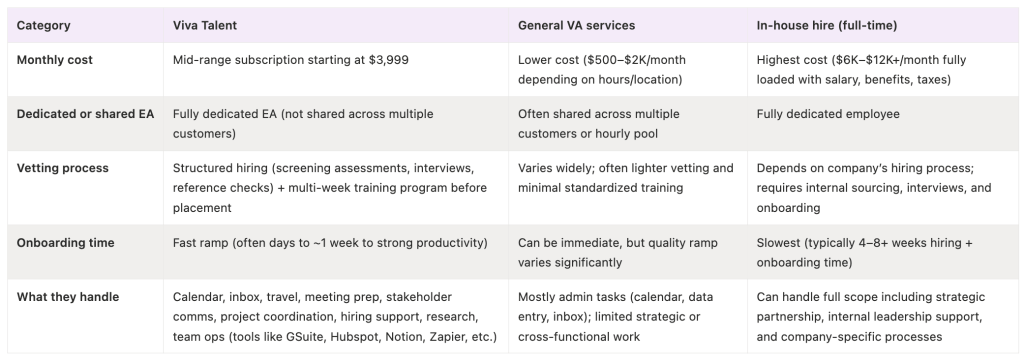
Viva EAs support plans start at $3,999/month for dedicated executive support. See full pricing and plans
See if Viva is right for your team
Startup founders often face the difficult decision of reducing headcount. Layoffs are never easy, and a reduction in force (RIF) is one of the most challenging situations any leader can experience. While this process is emotionally taxing and logistically complex, having the right support can make a significant difference. A well-supported leader is better equipped to manage these challenges thoughtfully and effectively, and this is where a virtual executive assistant can play a crucial role.
“The business impact that Viva has had on the team is all the time they’ve given back to their executives. They would not have been able to do half the things they’ve done if they didn’t have these EAs help them.” – Latoya Freeman, Exec Ops Partner, Notion
“The most challenging role we had to hire for at Shippo was an EA, we just couldn’t get it right. We were finding good people but struggled to find candidates who could keep up with the speed and level we expected. Until we decided to onboard a Viva EA. Our CEO said it’s been the most seamless EA experience we’ve ever had. – Teryle Aguilar, SVP of People, Shippo
Table of contents
- Before the RIF: Preparing for change
- During the RIF: Managing the process
- After the RIF: Rebuilding and recovery
If you already have an EA and are preparing for a RIF, holding on to your assistant is a smart move. Your EA can provide valuable support throughout the process, helping you stay organized, communicate clearly, and maintain focus. Before the RIF, they can assist by gathering key information, preparing internal communications, and helping you structure your plans to minimize disruption. During the RIF, they can manage your calendar to ensure you have enough time for critical conversations, schedule team meetings, and track follow-ups. After the RIF, your EA can document the entire process, ensuring you have clear records for future reference, and assist with team engagement efforts to boost morale and rebuild trust.
Even if you’re not currently facing a RIF, investing in EA support can help you avoid this situation altogether. A well-supported executive team, equipped with skilled assistants, is often better positioned to operate efficiently, make informed decisions, and drive business growth. By improving the organization and ensuring that leaders focus on high-impact priorities, EAs can help startups maintain stability and momentum, reducing the likelihood of needing to make tough staffing decisions down the road.
If you don’t yet have an EA, consider making it a priority. Having dedicated support in place can empower you to lead with clarity, focus, and resilience—even in difficult times.
1. Before the RIF: Preparing for change
Thoughtful planning and clear communication can make a difficult process more manageable, and an experienced EA can be a crucial partner in achieving this. These are some of the things our executive assistants have done for their customers, and what your EA can do for you.
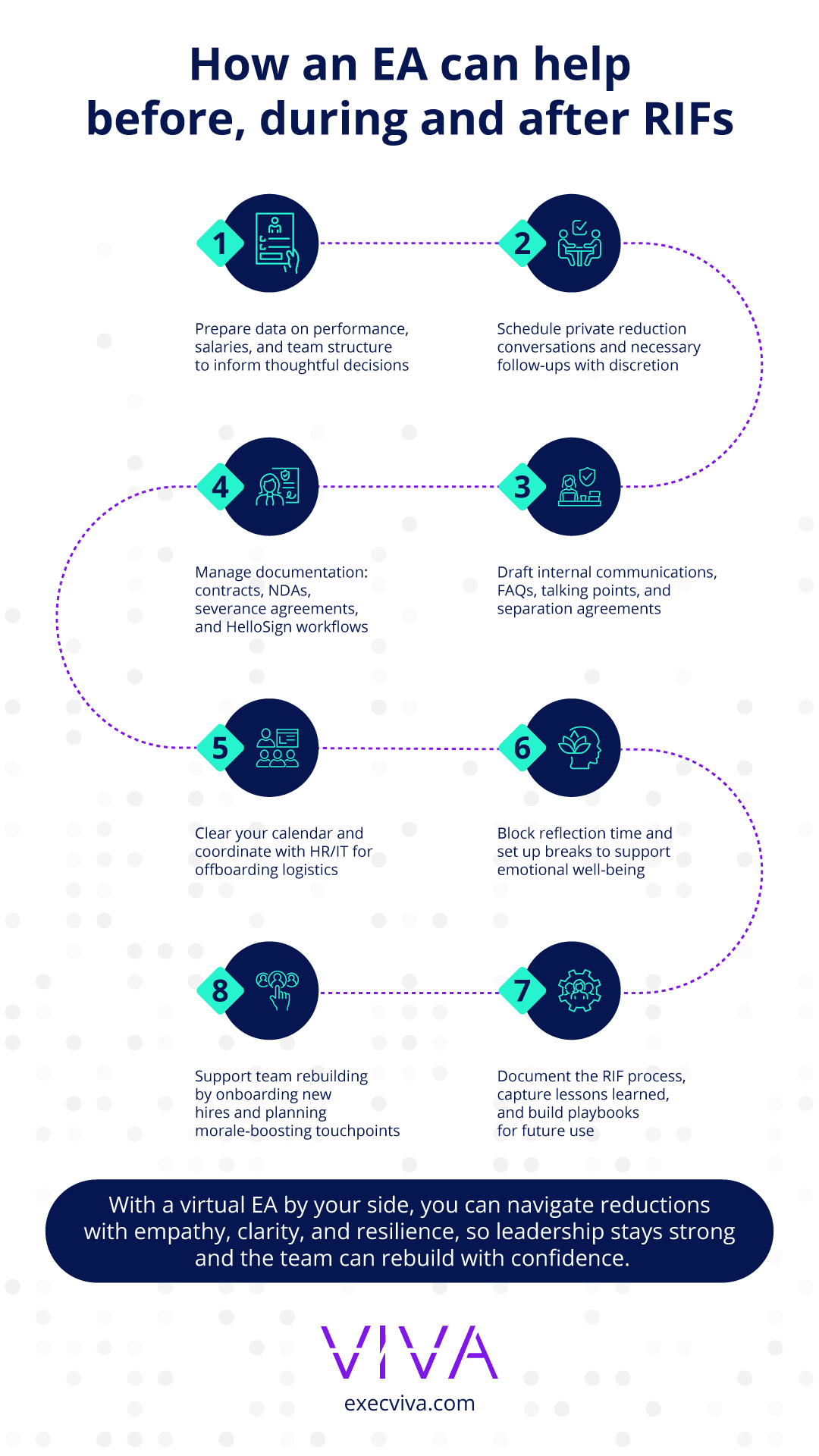
- Information gathering: Your EA can compile data on employee performance, salary details, and team structures to help you make informed decisions. One of our EAs recently supported her customer through a RIF by updating the existing dashboard with payroll and responsibility details, giving leadership the insights they needed to make informed decisions.
- Scheduling tough conversations: Your EA can organize meetings discreetly, minimizing disruptions and maintaining confidentiality. For example, one of our EAs added meeting invites to the calendar for managers, lawyers, and HR representatives involved in dismissals, carefully excluding the employee being dismissed to ensure the situation was handled with discretion.
- Internal communication planning: An EA can draft email templates, FAQs, and talking points to ensure your message is clear and consistent. Another Viva EA supported her customer by drafting exit communications, including emails and separation agreements based on templates. She ensured these communications were sent out at the appropriate time, maintaining professionalism and sensitivity throughout the process.
- Document management: Your EA can gather contracts, NDAs, and severance package details to keep everything organized. In one instance, one of our EAs updated separation agreements (formats -40 and +40) to include employee names, last working days, and severance package details. She also ensured the state-required addendum was included in each agreement and prepared HelloSign signature requests to streamline the documentation process.
By leveraging your EA’s organizational skills and proactive support, you can reduce the burden on yourself and your leadership team while ensuring a structured and thoughtful approach to a RIF.

2. During the RIF: Managing the process
A thoughtful and well-organized process can help minimize disruption and ensure your team feels supported throughout. These are some of the things our virtual executive assistants have done to help their executives during difficult times:
- Time management: Your EA can create a detailed schedule for notifying employees, team meetings, and follow-ups. One of our EAs played a key role in supporting their executive through this process. They organized and cleared the exec’s calendar to allow time for 15-minute calls with each employee being laid off. They also scheduled team calls with each sub-team and coordinated meetings with employees who were not impacted by the RIF. To help their executive stay informed, they attended these team calls, took detailed notes on the questions raised, and captured general observations about the team’s emotional state.
- Emotional support logistics: An EA can ensure you have quiet spaces for private conversations and manage your calendar to allow for mental breaks. Creating space for both you and your team to process the situation is crucial, and your EA can help by blocking out time for reflection and decompression.
- Real-time coordination: Your EA can communicate with HR, IT, and other departments to ensure offboarding steps are completed smoothly. This may include tracking account deactivations, revoking system access, or coordinating hardware returns. One of our EAs took charge of collecting laptops from departing employees, ensuring the process was efficient and respectful.
By relying on your EA’s support, you can stay focused on leading with empathy while ensuring logistical details are handled efficiently.

3. After the RIF: Rebuilding and recovery
By leveraging your EA’s skills during the recovery phase, you can ease the transition, strengthen your team, and set the stage for future growth.
- Team support: EAs are some of the most versatile members of your team, which means they can fill in the gaps across multiple functions. During a RIF, your EA can offer help to team members who are suddenly left without support. One of our EAs demonstrated this by immediately reaching out to one of the co-founders of the company after his EA was let go. They offered to help manage his calendar temporarily, ensuring continuity and stability. Their proactive approach led to them being moved onto the co-founder’s desk permanently, reinforcing how valuable EAs can be during times of change.
- Process documentation: An EA can document what worked (and what didn’t) to improve your process for the future. Keeping detailed records ensures your organization can adapt and refine its approach if faced with similar challenges later.
- Onboarding support for new hires: As your team stabilizes and grows again, your EA can streamline new hire onboarding and training. This might involve coordinating welcome materials, scheduling orientation meetings, or helping new employees get up to speed quickly.
- Team engagement: Morale often takes a hit after a RIF, and an EA can play an important role in restoring positivity. From organizing team communications and planning events to celebrating milestones and achievements, your EA can help rebuild a sense of connection and stability within the team.
While RIFs are challenging, an organized and well-supported leader can make the process less painful for everyone involved. Looking for an experienced virtual executive assistant to help you manage challenging transitions with confidence? Book a call today to learn how we can support you.